
There’s a quiet pattern I see in leadership, especially in high-performing, well-intentioned leaders.
They don’t lower their standards. They dilute them.
It is not because they lack clarity. It’s because they start choosing based on what they feel will be accepted rather than what they know is their best.
And the shift is subtle. It shows up in how they communicate. In the ideas they put forward. In the decisions they soften before they’re ever challenged.
They don’t say what they really think; they say what they believe will land. They don’t present their best; they present what will be acceptable.
And over time, this becomes their standard.
Life Lesson That Inspired Change
I was reminded of standards in a conversation with my youngest son about choices; the ones we make, why we make them, and how they shape us.
When he was a student at the Ontario College of Art and Design, one of his professors set a clear expectation at the beginning of the term:
Submit your best work. Not what you think I will like.
Then he added something that stayed with him:
“If you hand in something you think I’ll like and it’s not your best, and I don’t like it, the disappointment is doubled.”
This idea doesn’t just apply to art. It applies to everyday leadership. Decisions are unconsciously balanced between two primary drivers: what we believe is our best and what we think will be acceptable.
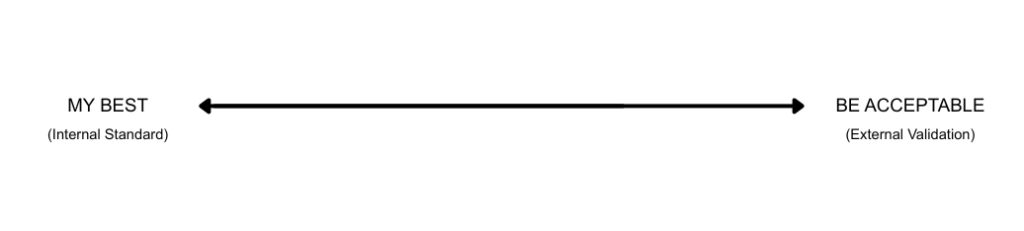
Most leaders don’t realize when they’ve drifted toward what is acceptable. Here’s a way to do a quick check-in, pause and ask:
- Am I shaping this for the best outcome or approval?
- What standard am I reinforcing?
- Does this reinforce how I want to be known?
Choosing Differently
My son didn’t treat this advice as a guideline for school or to optimize acceptance. He embraced it as a standard for how he lives.
- Real conversations over social presence; he shut down his Facebook account.
- Focus over distraction; he disposed of his iPhone and replaced it with a request to communicate by email.
- Boundaries over constant availability: he prioritized his needs over others’ expectations.
He didn’t ask, “What will people accept?” He made choices that reflected his best judgment, and others adjusted.
The leaders who create real influence aren’t the ones who offer what everyone wants to hear. They’re the ones who say what is needed and understand the value they offer.
Challenging Yourself
Before your next decision, personally or professionally, pause and ask:
- Where am I choosing what will be accepted instead of what I know is my best or what I believe is right?
- What standard am I reinforcing every time I seek approval?
- What would change if I stopped optimizing for approval and started leading by my own standards?
The challenge for leaders isn’t knowing what their best is. It’s choosing it.
Ready to Elevate Your Leadership?
At Authentic Leaders Edge, we help professionals like you develop a powerful leadership presence. Whether you’re leading a team or defining your personal brand, Dorothy Lazovik provides tailored coaching to accelerate your growth.
Book a complimentary 30-minute consultation to explore how coaching can help you step into your full potential. Email today to get started!